Free Tables, False Confidence: Using Asian Casino Demos as a Classroom Instead of a Crystal Ball

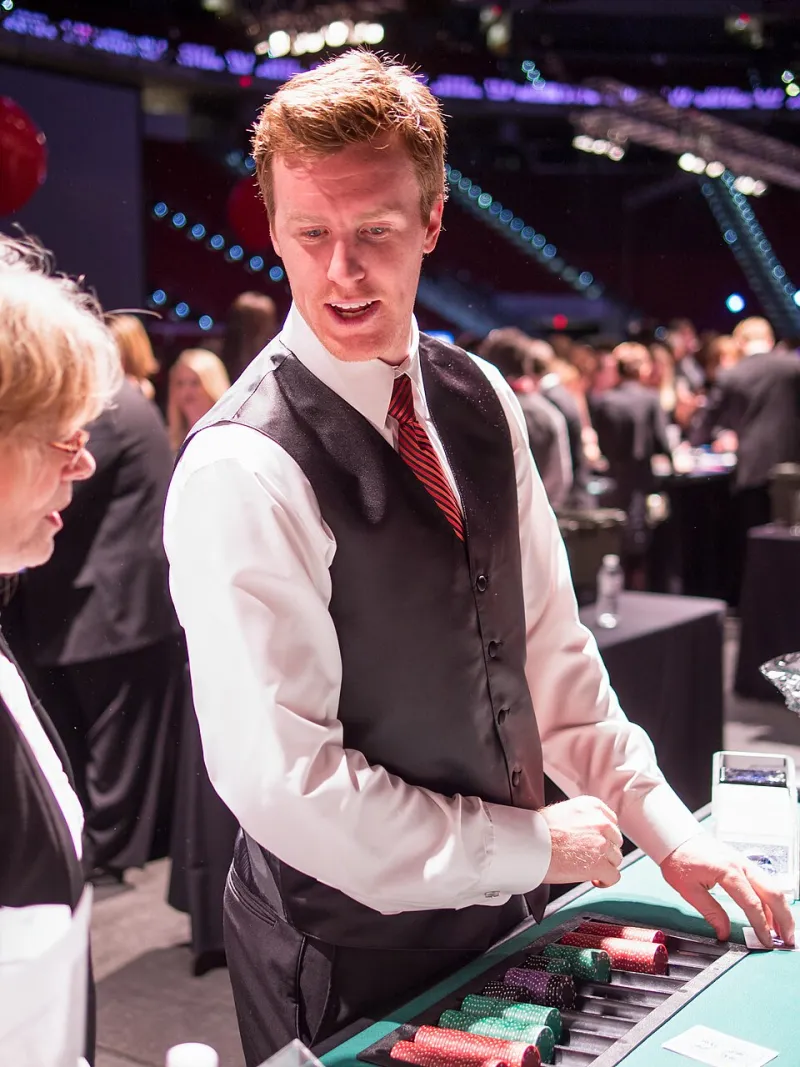
Photo: Wilfredor, CC BY-SA 4.0, via Wikimedia Commons
There's a specific kind of confidence that shows up after about forty minutes of free-play baccarat. You've hit a few banker runs, you've watched the tie bet land twice, and suddenly the game feels readable. That feeling is the demo mode trap, and it's worth naming early: free tables are excellent at teaching you how a game works and terrible at teaching you what will happen next.
That distinction sounds obvious. In practice, most players blur it somewhere around the third free shoe.
What demo tables are genuinely good at
Strip away the marketing and a free-play table is a simulator, and a decent one. Things it does well:
- Hand flow. Baccarat's third-card rule is the classic example. Reading it in a rules page is one thing; watching it resolve forty times is another. The same goes for the bet layout in sic bo and the two-card rhythm of dragon tiger.
- Table mechanics. Where the buttons are, how bets are confirmed, how a win is paid, when the shoe resets. Fumbling this on a live dealer table with a real timer running is a small embarrassment you can avoid entirely.
- Rule variants. Asian-facing operators run commission baccarat, no-commission (EZ-style) baccarat, and several sic bo paytable versions where the odds on specific bets differ. Free play lets you sit with each variant for a few minutes before deciding which one you actually like.
- Bet-sizing rehearsal. Practicing a unit size of, say, 1–2 percent of a $300 bankroll tells you something real about how long money lasts through a cold stretch. That lesson transfers.
Where the free version starts lying to you
Here's the part the landing page doesn't mention.
Demo play removes the only variable that matters. With nothing at stake, players bet the tie, hammer the triple in sic bo, and push max on every hunch. The demo will happily let you do it, and it will occasionally pay you for it. That outcome teaches you nothing about your real behavior at a paying table, where a bad run produces a very different decision-making process.
Demo results are not evidence. Short-run outcomes at any table game are noise. A hundred free hands of dragon tiger will not tell you whether a pattern exists, because no pattern exists to begin with — each deal is independent. If you leave demo play believing you've found a rhythm, you've found variance with a friendly face.
Pace is off. Live dealer baccarat moves at roughly 50–70 hands an hour depending on the table; dragon tiger runs faster; sic bo slower. Demo tables click along at whatever speed you press the button. That changes how quickly a bankroll drains on a bad night, which is exactly the thing you needed to practice.
Bonus rules are invisible. This is the big one for U.S. players. Most wagering contribution tables weight baccarat lower than slots and exclude some Asian table games entirely from bonus clearing. A free table will never tell you that. Read the promotion terms, not the demo.
Limits, comps, and identity checks don't exist. Real Asian-facing tables carry minimum bets that can range from a couple of dollars to well above $25 depending on the room, and the low-limit tables are the crowded ones during U.S. evening hours. Demo has no minimums, no tier points, no host, no KYC, and no withdrawal step. Those are the friction points that make real play feel different from the free version.
The 20-minute practice block
If you want demo play to be worth your time, give it structure. One game per session, twenty minutes, no exceptions.
Minutes 0–3: Read the rules and the paytable. Not the marketing copy — the actual rules. Write down the house edge on the bets you plan to place, and the bets you're curious about. Sic bo in particular rewards five minutes of reading before you touch anything.
Minutes 3–8: Flat-bet the minimum for 30–40 hands. No progression, no feeling. The goal is rhythm, not profit. Keep a running tally of wins and losses in a notes app so you're watching the shape of the session rather than your balance.
Minutes 8–14: Rehearse your real stakes. Take a number you'd actually bring to a live table — say $200 — and bet the way you'd bet it, at 1–2 percent units. Watch how fast a losing stretch eats through it. This is the single most useful thing demo mode can do for you.
Minutes 14–18: Play the worst bet on the table, deliberately. The tie, the triple, whatever pays big and hits rarely. Feel how brutal the gaps are. It's a cheap inoculation against the urge to chase those bets later.
Minutes 18–20: Write three lines. Which bet you'll actually play, what your maximum session loss is, and the point at which you stand up. Three sentences. If you can't write them, you're not ready to play for money.
Run that block on two or three different games across a week, then take one low-stakes live session and compare your notes to what actually happened. The gap between the two is the real lesson.
A note for U.S. players on timing
Asian-facing tables are busiest during Asian evening hours, which lands in the morning for most of the U.S. — a genuinely underrated advantage. If you've rehearsed in demo, you can sit down at a live table during a quiet U.S. afternoon, confirm the rules, place a few considered bets, and leave, without burning a seat on a learning curve.
The short version
Use free tables to learn the machinery: the layout, the card rules, the paytables, the pace of your own decision-making. Do not use them to look for streaks, validate a system, or audition a betting progression — the demo has no memory and no stake, and it will tell you whatever you want to hear. Treat it as a driving simulator and you'll get real value out of it. Treat it as a forecast and you'll be paying for the lesson at a live table.