Dragon Tiger Doesn’t Owe You a Comeback: Why Streak Systems Are a Story, Not a Strategy

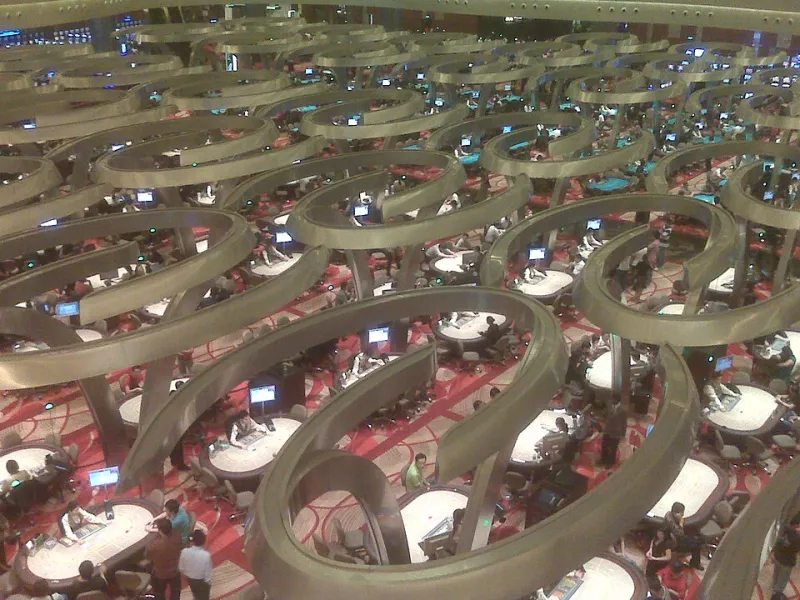
Photo: dragon tiger casino table with playing cards chips and simple betting layout, via img.freepik.com
Dragon Tiger is one of the easiest casino table games to learn. Two cards, two sides, pick one. That simplicity is the selling point. It is also the reason the game attracts so many bad theories.
A player wins a few hands on Dragon and starts calling it a run. Then the run ends, and the next thought arrives: Dragon is due. Or Dragon is hot. Or Dragon always cools off after five. The language sounds like analysis. Most of the time, it is a story we tell ourselves to make a random sequence feel controllable.
This is the honest-expectations conversation King88 T2 wants to have with U.S. players. Dragon Tiger can be a fun, fast table game. It is not a puzzle with a hidden solution. And streak systems do not fix that.
A Run Is a Memory, Not a Forecast
Dragon Tiger rounds are independent. The cards are shuffled, dealt, and resolved. Then the next round starts. The shoe does not know that Dragon won four times in a row. It does not know you lost your last three bets. It does not owe you a correction because the last result felt unfair.
This is the gambler’s fallacy in a clean, easy-to-see form. If a coin lands heads five times, the next flip is still roughly 50/50. Dragon Tiger is not exactly a coin flip — ties exist, and the payouts reflect the house edge — but the core idea holds. Past outcomes do not change the probabilities of the next round in a meaningful way.
Players often reply that they are not betting on the next round; they are betting on the pattern. But the pattern is just a record of what already happened. It has no predictive power unless the game is broken or the deck is not being shuffled properly. In a regulated-feeling game with standard rules, you should not assume either.
The ‘Cool Off’ Theory Is Comfort Food
Betting Dragon until it cools off feels smart because it gives you a rule. Rules are comforting. They make a fast game feel less random. The problem is that the rule is backwards. You are not waiting for a correction. You are simply choosing a side and hoping the next few rounds go your way.
If Dragon has won six in a row, the next round is not more likely to be Tiger because Dragon is tired. The table does not have momentum. The cards do not have a memory. What you are feeling is recency bias: the most recent results loom larger than they should.
This is not a knock on anyone who enjoys tracking streaks. Plenty of U.S. sports fans watch runs in basketball and baseball, and pattern-watching is part of the fun. The mistake is treating a fun observation as a betting signal. A streak can be entertaining. It cannot be trusted.
Where Doubling Math Breaks
The most common streak system is the martingale: double your bet after every loss so that one win recovers everything. On paper, it looks tidy. In practice, it runs into two walls.
The first wall is bankroll. Start with a $10 bet. Lose once, bet $20. Lose again, bet $40. Then $80, $160, $320. After six losses, you have $630 on the table just to chase a $10 starting bet. A short cold streak can turn into a serious exposure before the “inevitable” win arrives. And in Dragon Tiger, six losses in a row is not some exotic event. It happens.
The second wall is table limits. Even if your bankroll can handle the next double, the table maximum may not. Once you hit the cap, the progression breaks. You cannot keep doubling, and the loss you were trying to recover is still there. The system did not fail because you lacked discipline. It failed because the math was always going to meet a limit eventually.
Bankroll Math: The Cost of Chasing
Every bet in Dragon Tiger carries a house edge. That edge is small enough to feel harmless in a short session, which is exactly why the game is popular. But small edges add up, and the variance can be brutal.
A streak system does not remove the house edge. It usually increases the size of your bets, which increases how much the edge can bite. You might win a session and still be making bad bets. You might lose a session and blame the streak. The more useful question is whether your bet sizes fit your bankroll and whether you are playing for entertainment or pretending you have an edge you do not have.
U.S. players are used to hearing “the house always wins.” It is true, but it can sound too simple. The better version is this: the house wins slowly, through many small edges, and the player’s best defense is controlled bet sizing and honest expectations.
How to Play Without Lying to Yourself
If you like Dragon Tiger, play it as a fast, simple table game. Set a session budget before you sit down. Decide what a loss looks like and what a win looks like. Use flat bets instead of doubling after losses. Take breaks. Do not move your loss limit because you are sure a run is about to turn.
If you enjoy tracking streaks, keep a note. Treat it like a scorecard, not a prophecy. You can observe that Dragon has won five in a row without believing the table owes you Tiger next. The moment you let the pattern size your bets for you, you have stopped playing a game and started following a story.
And if you feel the urge to chase a loss, stop for the session. That urge is the real signal. It is not telling you that Dragon is due. It is telling you that the game has stopped being entertainment.
The King88 T2 Take
Dragon Tiger does not need a complicated strategy. It needs a clear head. The game is fun because it is simple, not because it is solvable. Streak systems turn that simplicity into a trap by making random results feel meaningful.
Our neutral take is simple: enjoy the game, keep your bets modest, and do not ask a card table to give you a comeback. A run is a story. Your bankroll is real. Treat the two accordingly.