Past Baccarat: Niu Niu, Fan Tan, Pai Gow Tiles, and Two More Asian Games Worth Learning

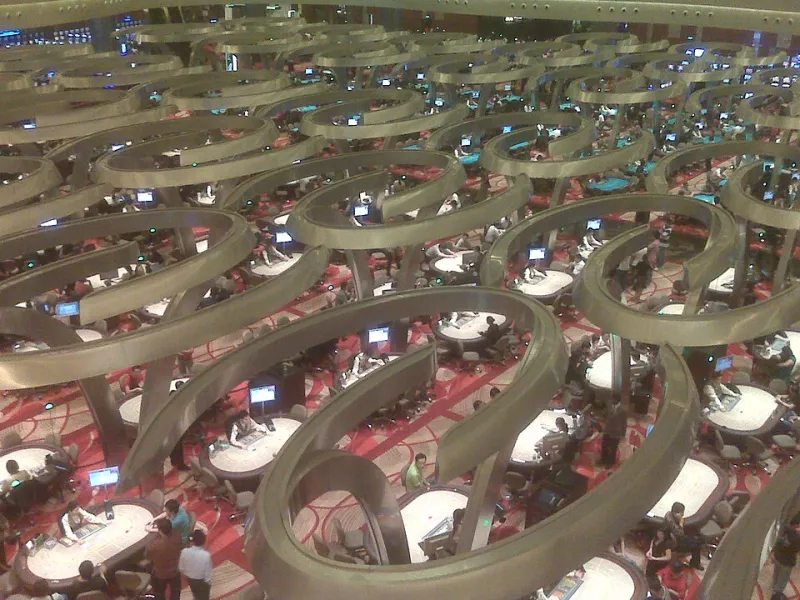
Photo: asian casino table games dice tiles cards close up in bright casino setting, via i.pinimg.com
Why Bother Leaving the Baccarat Table
Baccarat is comfortable. Two cards, a couple of decisions, no thinking required. Dragon tiger is even simpler. But comfort gets boring, and a lot of American players who came up on poker and blackjack quietly want a game with a decision in it.
The Asian table lineup has five games that get skipped over in the lobby because the names are unfamiliar and the rules are not in plain English anywhere. Let's fix that. Below is the short version of each, in the order I would hand them to a curious beginner.
One housekeeping note before the numbers: edges vary by table, side bet, and commission structure. Treat the percentages that follow as ranges to compare games against each other, not as promises about any specific table.
Niu Niu (Bull Bull): The Poker Brain Game
Niu Niu, often listed as Bull or Bull Bull, is the closest thing to a poker hand-reading exercise in the Asian table lineup. You get five cards and need to form a three-card group that totals a multiple of ten, with the remaining two cards determining your hand strength. A hand worth a multiple of ten is your base; better combinations like a bull bull or a five-of-a-kind-style monster pay more.
Why it clicks for U.S. players: the sorting decision feels like arranging a poker hand, and the banker-versus-player structure keeps it familiar. Rounds run fast, maybe twenty seconds once you know what you are doing.
Edge range: roughly 2.5% to 5% depending on which side you back and how the table treats ties and commissions. Side bets push that higher quickly.
Where to practice: most Asian-facing casinos offer a live Niu Niu table plus RNG versions in demo mode. Look for a table with a visible hand-ranking chart before you sit down.
Pai Gow Tiles: High Strategy, Low Drama
Pai Gow Tiles uses thirty-two Chinese dominoes and asks you to split seven tiles into a high hand and a low hand. The catch is there is an exact ranking hierarchy, and the house way — the casino's house-set method for the dealer — is a whole document you can study.
Why it clicks: this is the game for anyone who likes a slow, thoughtful puzzle with a lot of pushes. Roughly a third of hands tie, which stretches a bankroll further than the pace suggests.
Edge range: about 1.5% to 2.5% played straight with the house way. That is genuinely competitive with decent blackjack.
Who should be cautious: not the risk-takers — the impatient. Rounds are slow, and learning the hand rankings takes an evening. Practice in free play until you can read a seven-tile hand without a cheat sheet.
Fan Tan: Pure Carnival Chance
Fan Tan is old-school and beautifully simple. A random number of buttons, beads, or coins gets covered, then counted off four at a time. The remainder — one, two, three, or four — is the winner. You also get side bets on specific final numbers.
Why it clicks: zero skill, zero memorization, and a rhythm that feels like a fairground game. Great for players who want to switch off and socialize.
Edge range: roughly 2% to 5% on the main bet, with the specific-number side bets landing much worse. Read the payout schedule before you touch the prop bets.
Bankroll note: the game moves quickly and it is easy to lose track of how many hands you have played. Set a session timer, not just a loss limit.
Hoo Hey How (Fish-Prawn-Crab): Fast and Friendly
Three dice, six symbols — fish, prawn, crab, gourd, coin, and a tiger or stag depending on the table. Bet on any symbol and you get paid based on how many of the three dice show it.
Why it clicks: it is the easiest game on this list to learn and the most social. If you have ever played chuck-a-luck at a county fair, you already understand it.
Edge range: around 8% on the basic one-to-one symbol bets, and meaningfully worse on combination bets. This is the most expensive game here.
Bankroll note: treat it as entertainment money. Small bets, short sessions, no chasing.
Thirteen Cards: The Poker Crossover
Thirteen Cards, sometimes listed as Chinese Poker, deals thirteen cards that you arrange into three hands — a five-card back, a five-card middle, and a three-card front. You compare against the dealer or other players, and any mis-set hand usually costs you.
Why it clicks: this one will feel instantly familiar to anyone who has played poker home games. The skill is in the split, and the penalty for a bad arrangement keeps you engaged.
Edge range: hard to pin down because most versions run on a commission or per-hand fee rather than a classic house edge. Budget roughly 2% to 5% in commission drag depending on stakes and the operator's fee structure.
Where to practice: RNG versions are common in demo mode. Learn the foul-hand rules first — that is where beginners bleed.
The Comparison at a Glance
| Game | Skill level | Approx. house edge | Pace |
|---|---|---|---|
| Pai Gow Tiles | High | 1.5%–2.5% | Slow |
| Niu Niu | Medium | 2.5%–5% | Fast |
| Fan Tan | None | 2%–5% | Fast |
| Thirteen Cards | Medium-high | ~2%–5% commission | Medium |
| Hoo Hey How | None | ~8% | Very fast |
Where Bankroll Discipline Actually Matters
The two carnival games — Fan Tan and Hoo Hey How — are the ones that will quietly drain a session. Not because they are rigged, but because they are fast, cheap-looking, and require no concentration. Twenty minutes can vanish before you realize you have played two hundred hands.
Niu Niu is the middle case. The edge is reasonable and the pace is high, so per-hour expected loss runs higher than the percentage suggests. Cap your bets rather than your hands.
Pai Gow Tiles and Thirteen Cards reward patience. If you are willing to play slowly and set hands correctly, they are the two friendliest on this list for a modest bankroll.
The Try-This-First Path
- Start with Hoo Hey How in demo mode for ten minutes. It teaches you the rhythm of Asian dice tables with almost no rules overhead — just do not stay long.
- Move to Niu Niu next. It has a real decision, quick feedback, and a manageable edge.
- Graduate to Pai Gow Tiles once you want something to study. Print the hand rankings. Play free until you are bored of the cheat sheet.
- Try Fan Tan when you want a break from thinking, with a strict time limit.
- Save Thirteen Cards for last — it rewards poker instincts but punishes sloppy setting.
Almost every Asian-facing casino with a live floor will let you watch these tables before you buy in. Watching is free, and it is the fastest way to learn the betting layout without slowing anyone down. Practice first, deposit small, and remember that online casino rules differ by state here in the U.S. — check what applies where you live before you play for real money.